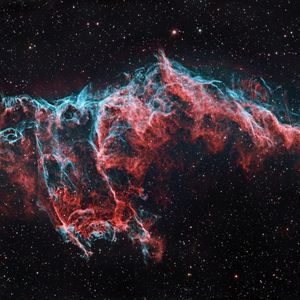
NGC 6979 – Pickering’s Triangle
July 13, 2021
Use mouse wheel to zoom, drag to pan, and buttons for other options
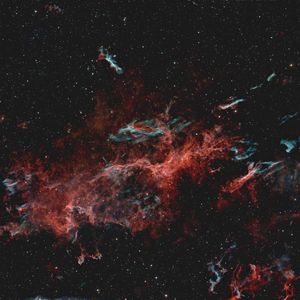
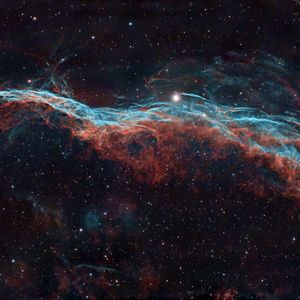
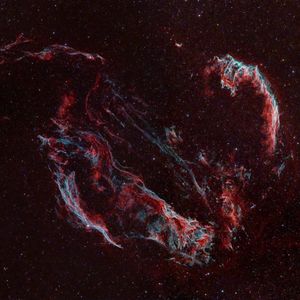
Pickering’s Triangle is part of a much larger formation. It's the central part of a large complex called the Veil Nebula.
The Veil Nebula (also called the Cygnus Loop) is the remains of a star that annihilated itself in a supernova explosion some 8,000 years ago. It’s located roughly 2,100 light years away in the Cygnus constellation.
Williamina Paton Fleming, working as one of unpaid volunteer women known as the “Harvard Computers” discovered Pickering’s Triangle in 1904. Unfortunately, it was named after the director of the Harvard College Observatory, E.C. Pickering.
Fleming was an extraordinary contributor to the science of astronomy over her career. She developed a system for classifying stars based on hydrogen spectra, discovered the Horsehead Nebula, and was the first to identify a white dwarf star.
See below for more images and information related to the Veil.


Telescope

Celestron 1100 EdgeHD
Finding Chart

Click to expand
Image Capture
Location:
Back yard in North Dallas
Camera:
Total integration: 3h 45m
Integration per filter:
- Optolong L-eXtreme: 3h 45m (75 × 180")
Coordinates: 20h 48m 6s · +31° 38′ 13″
ZWO ASI2400MC-Pro

Awards