
Dreyer’s Nebula – IC 447 et al
November 7, 2025
Use mouse wheel to zoom, drag to pan, and buttons for other options
Although I’ve labeled this image for the largest object it contains, it actually reveals a number of distinct astronomical objects. The field in the image is a small part of what is called the Monoceros R1 Complex—a loose association of reflection regions, gas, dust, and young stars. It lies about 2,500 light years away in the Monoceros constellation.
The origin of the common name, Dreyer’s Nebula, is unknown. Edward Barnard actually discovered it in 1894, and it was added to Dreyer’s Index Catalogue as IC 447 in 1895.
The area is responsible for a copious amount of star formation due to the collapse of gaseous filaments affected by gravitational instability. This has produced giant, hot young stars that illuminate the area. The gas and dust scatters the light from these stars (in much the same way our atmosphere scatters sunlight) to produce the blue-shaded objects surrounded by red, ionized hydrogen gas.
The largest formation in the area is the aforementioned IC 447 (also catalogued as IC 2169):

Just below that, we can see the smaller reflection nebula IC 446:

In the early 1960s, Sydney van den Bergh identified several distinct reflection regions, three of them within the confines of IC 447, and catalogued them separately. The first is vdB 76, located in the lower part of IC 447:

Near the top of IC 447, we see the tiny (from our vantage) vdB 77:

Just to the right of vdB 77 sits the more prominent vdB 78:
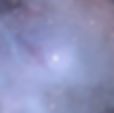
At roughly four o’clock from IC 447 lies the wispy NGC 2245, which William Herschel discovered in 1784:
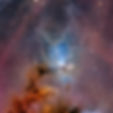
vdB 82 (also catalogued as NGC 2247) sits below NGC 2245 surrounded by orange, brown, and red dust and gas:

And finally, between IC 446 and vdB 82, the small, faint reflection nebula vdB 79 plays out an unassuming existence:


Telescope

Takahashi TOA130
Finding Chart

Click to expand
Image Capture
Location:
Deep Sky West
Camera:
Total integration: 47h 41m
Integration per filter:
- Lum/Clear: 9h 6m (182 × 180")
- R: 6h 18m (126 × 180")
- G: 6h 27m (129 × 180")
- B: 6h 30m (130 × 180")
- Hα: 19h 20m (116 × 600")
Coordinates: 6h 32m 19s · +10° 13′ 17″
Moravian C5a-100M


Astrobin Image of the Day
Awards

