
Sh2-274 (Abell 21) – The Medusa Nebula
March 31, 2023
Use mouse wheel to zoom, drag to pan, and buttons for other options
The Medusa Nebula is an ancient planetary nebula in the Gemini constellation approximately 1,500 light years from us. It’s about four light years in diameter and is said to be around 8,800 years old.
The name “planetary nebula” is a misnomer. Planetary nebulas have nothing to do with planets. Astronomers in the 18th century thought these objects were planets, but now we know differently. When a star with 80% to 800% of the sun’s mass begins to run out of hydrogen fuel, it starts fusing helium into heavier elements such as carbon and oxygen. As it does this, the additional energy from those stepped-up levels of fusion cause it to expel its outer layers.
Ultimately, the star expels all its outer layers from its core, leaving the core exposed in sort of a cosmic burp. Once all the helium is burned up, fusion ceases in the core and what is left is a giant, dense ball of carbon (about the size of the earth, but with the mass of the sun)—a diamond in the sky called a “white dwarf.” That core no longer produces new energy, but it’s still extremely hot and gives off copious amounts of radiation, ionizing the gas it expelled earlier. That cloud of gas then eventually dissipates. But before it does, the ionized gas gives off light we can record here on earth with our cameras (if the star is close enough to us).




Telescope

Celestron 1100 EdgeHD
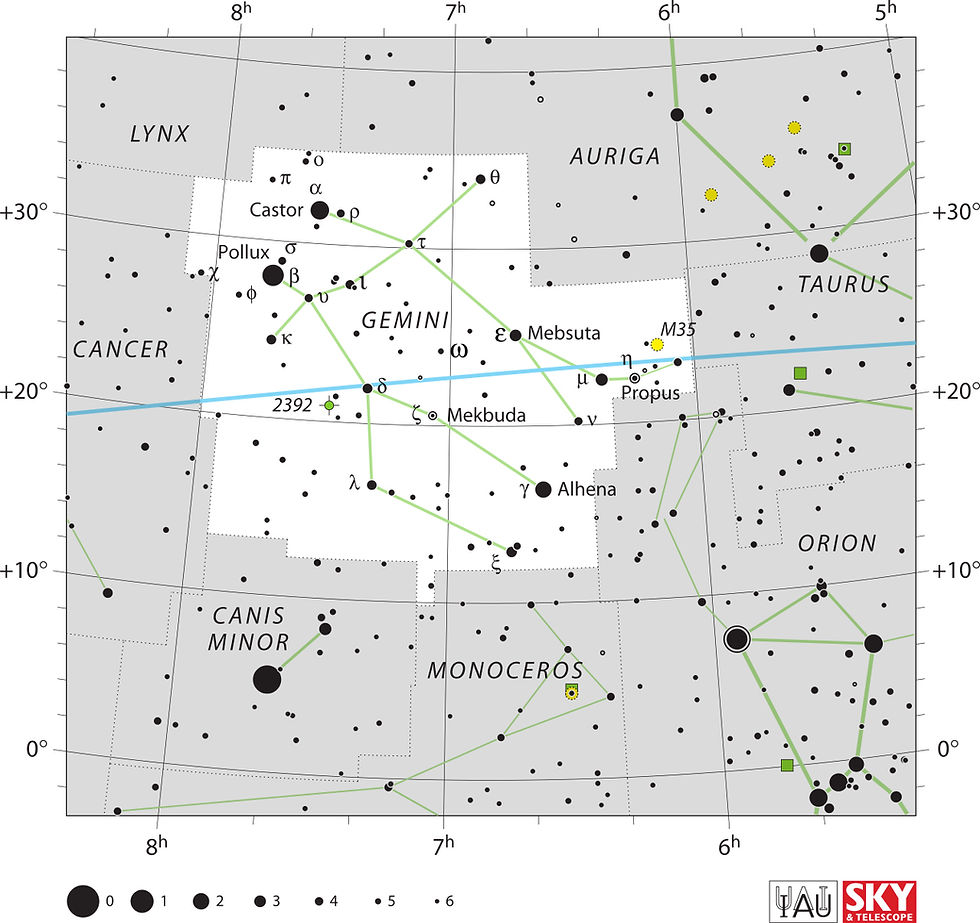
Finding Chart

Click to expand
Image Capture
Location:
Back yard in North Dallas
Camera:
Total integration: 24h 30m
Integration per filter:
- R: 39m (39 × 60")
- G: 39m (39 × 60")
- B: 39m (39 × 60")
- Hα: 11h 21m (227 × 300")
- O3: 11h 12m (224 × 300")
Coordinates: 7h 28m 36s · +13° 20′ 41″
ZWO ASI6200MM-Pro


Astrobin Top Pick Nomination
Awards
