
vdB 31
March 19, 2026
Use mouse wheel to zoom, drag to pan, and buttons for other options
Around 470 light years away in the Auriga constellation, the giant young star AB Aurigae lights up molecular dust with a deep blue hue.
The Hubble Space Telescope has detected a flattened spiral formation of gas and dust surrounding AB Aurigae, which scientists believe to be a protoplanetary disk in the process of forming a new solar system.
Studies suggest that the disk surrounding AB Aurigae is as large as 330 astronomical units in diameter. One astronomical unit (AU) is pegged as the average distance between the Earth and the sun. Note that Pluto’s average distance from the sun is approximately 39.5 AU (3.67 billion miles).
vdB 31 is flanked by cold, dark molecular clouds catalogued as Barnard 26, 27, and 28. These kinds of clouds obscure light from stars in their depths and from stars behind them from our vantage. These types of clouds are the primary vehicle for new star formation in the universe.


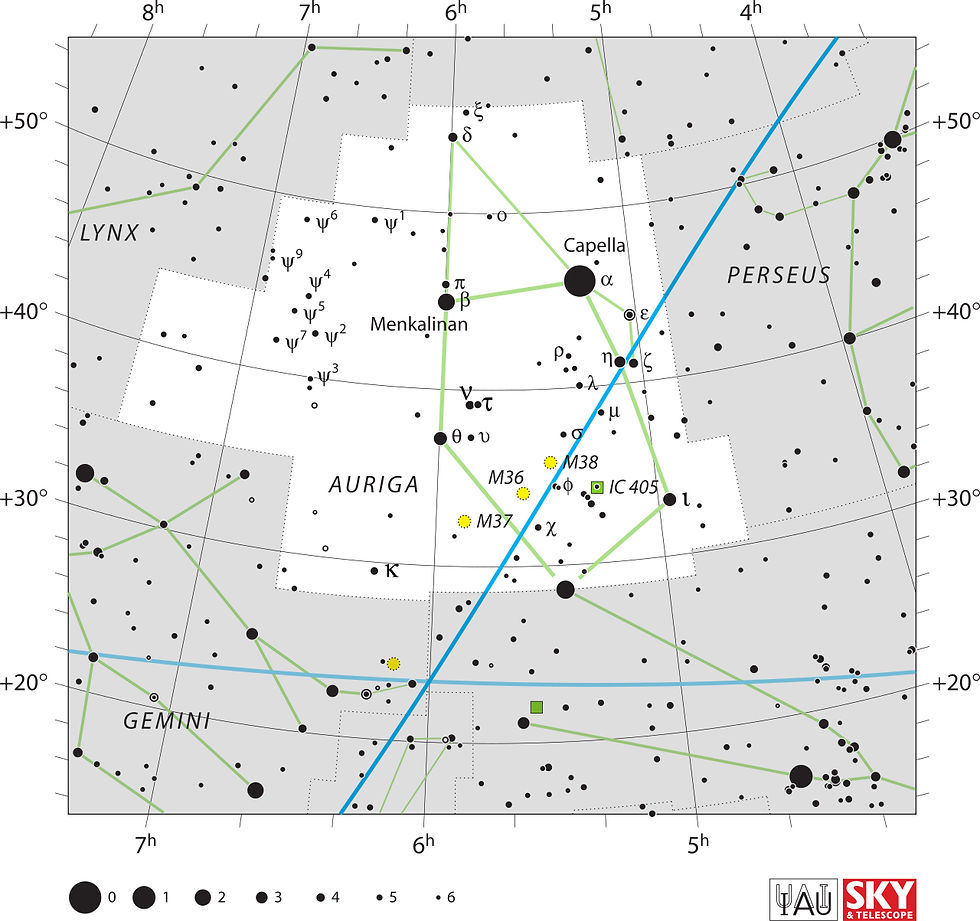


Telescope

Planewave CDK12.5
Finding Chart
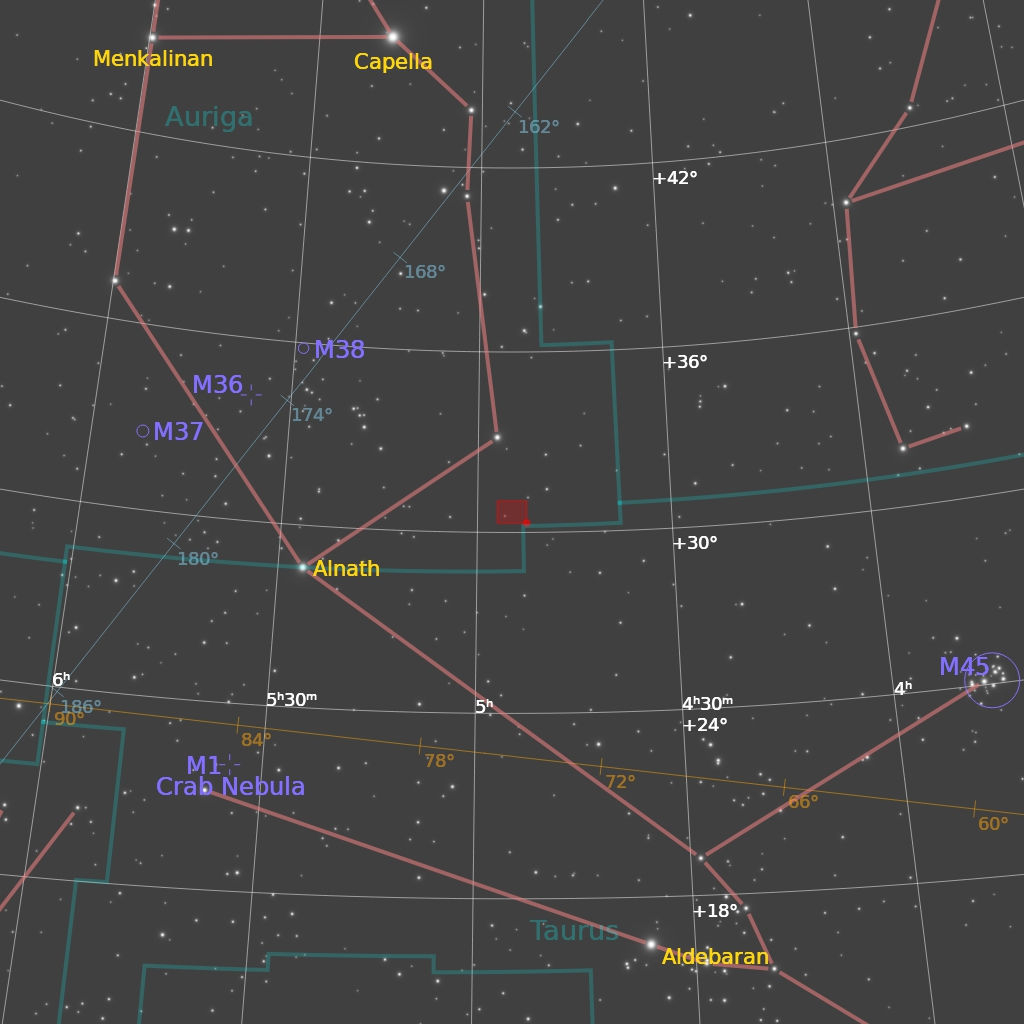
Click to expand
Image Capture
Location:
Deep Sky West
Camera:
Total integration: 27h 39m
Integration per filter:
- Lum/Clear: 8h 30m (170 × 180")
- R: 6h 21m (127 × 180")
- G: 6h 27m (129 × 180")
- B: 6h 21m (127 × 180")
Coordinates: 4h 54m 40.1s · +30° 40′ 58″
Moravian C5a-100M


Astrobin Top Pick Nomination
Awards
