The Nebulas of Auriga Wide Field
September 28, 2022
Use mouse wheel to zoom, drag to pan, and buttons for other options
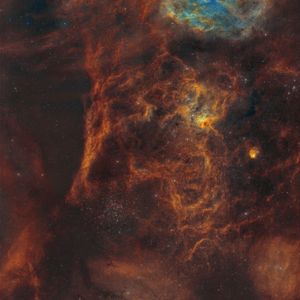
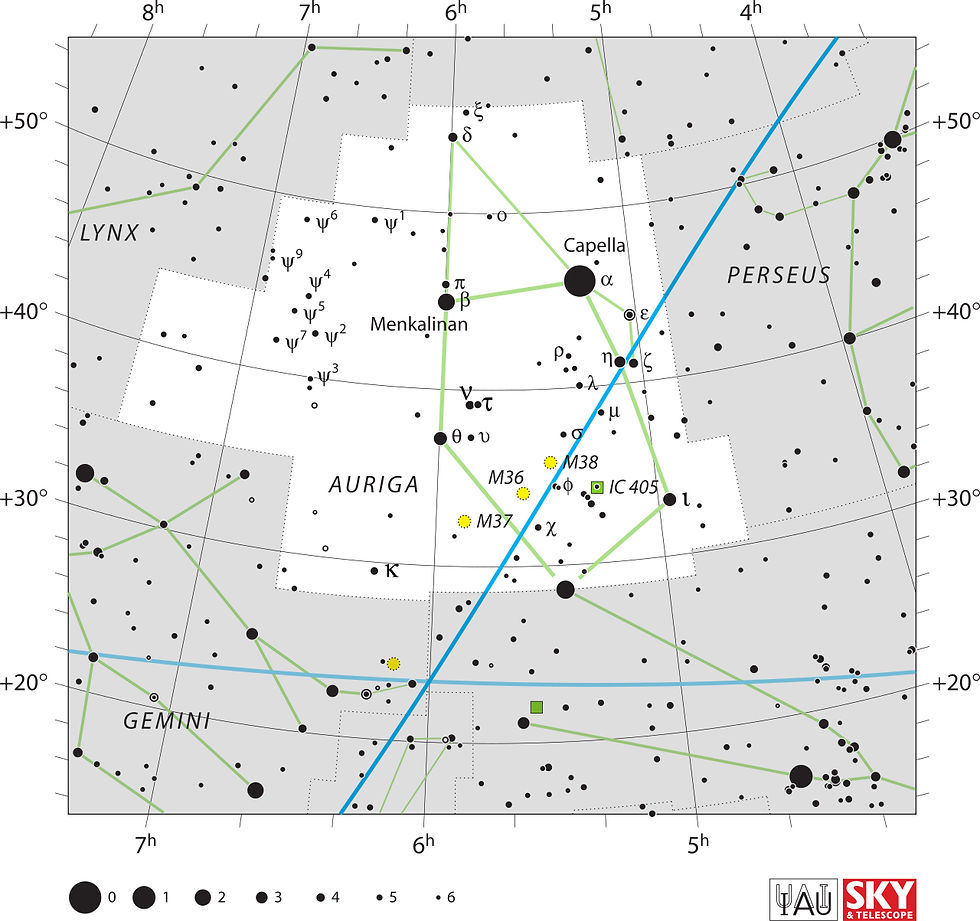
Here’s a wide-field shot of many of the nebulas in the Auriga constellation. I have a much higher-resolution large mosaic of this same region taken with a much larger telescope. But this image is still a favorite of mine.
The Auriga Constellation contains dozens of nebulas and other objects well-known to astronomers, both amateur and professional. But everyone else is largely unaware of them. This field captures a giant emission region that encompasses such objects as the Flaming Star Nebula, the Tadpoles, the Spider and the Fly, and the Gripping Hand. Tucked into its folds the open star cluster Messier 38, the Starfish Cluster, also makes an appearance.
I could write a three-volume treatise about what is going on in this image. Fortunately, Jeff Kanipe and Dennis Webb have already done that. So instead, I’ll provide a crop and short description of each of the major formations in the frame, with great deference to Messrs. Kanipe and Webb and their amazing series of books, Annals of the Deep Sky.
The Flaming Star Nebula
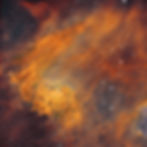
IC 405, the Flaming Star Nebula, contains both an emission region catalogued as Sh2-229, and a reflection nebula catalogued as vdB 34. It lies 1,500 light years away and spans 2.5 light years. The giant central star, AE Aurigae, is a runaway star—a star moving so fast it will eventually leave the galaxy. But while it’s passing through, its extreme outflow of radiation is ionizing the gasses in its path, some of which are also reflecting its light.
The Tadpoles
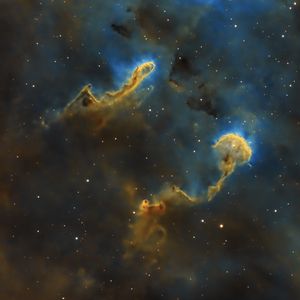
NGC 1893, the Tadpoles Nebula, refers to the star cluster illuminating the emission nebula catalogued as IC 410 and Sh2-236. Inside that nebulous area, you can see two streamers of colder, darker gas that give the nebula its colloquial name. Catalogued as Sim 129 and Sim 130, each tadpole is roughly 10 light years long and they likely contain nascent stars. Though it looks smaller than the Flaming Star, it’s 40 times its size at 100 light years across. It merely looks smaller because it’s so much farther away at a distance of 12,000 light years.

The Spider and the Fly
Known as the Fly Nebula, NGC 1931 is another star cluster buried in a small nebulous formation, Sh2-237. It’s companion, and sworn enemy, the Spider Nebula, IC 417 and Sh2-234, lies close by, ready to entangle it. The Fly is about 7,000 light years from us while the Spider has some ground to cover at 10,000 light years away.


IC 417 & Sh2-234 – The Spider and NGC 1931 & Sh2-237 – The Fly
The Starfish Cluster
Roughly 4,200 light years away, the Starfish Cluster, Messier 38 (M3) is one of three open star clusters Messier catalogued in Auriga—the other two being M36 and M37.

The Gripping Hand
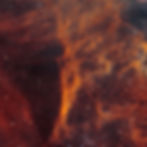
The emission region Sh2-230 is not a particularly popular target, and there is a dearth of information about it on the interwebs. But it has long fascinated me, appearing as a large claw reaching out to grab its companions in Auriga. So I gave it the personal name The Gripping Hand—an homage to the sequel to The Mote in God’s Eye by Larry Niven and Jerry Pournelle. Distance measurements are all over the map, but many seem to agree that it is between 7,000 and 10,000 light years away.




William Optics ZenithStar 61
Telescope
Finder Chart

Click to expand
Total integration: 29h 37m
Integration per filter:
- R: 19m (38 × 30")
- G: 19m (38 × 30")
- B: 20h (40 × 30")
- Hα: 9h 45m (195 × 180")
- S2: 9h 18m (186 × 180")
- O3: 9h 36m (192 × 180")
Coordinates: 5h 22m 27s · +34° 16′ 31″
Image Capture
Location:
Back yard in North Dallas
Camera:
ZWO ASI6200MM-Pro

Awards