
Messier 97 (M97) – The Owl Nebula
December 26, 2020
Use mouse wheel to zoom, drag to pan, and buttons for other options
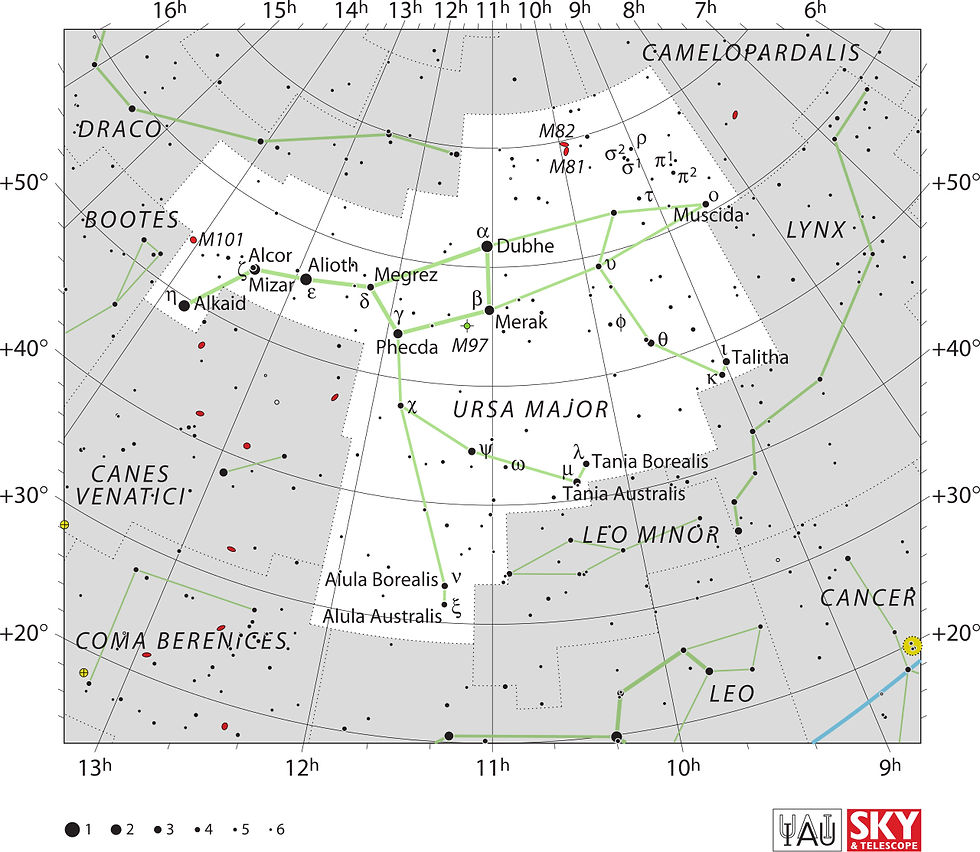
Messier 97, the Owl Nebula, is a planetary nebula in the Ursa Major constellation. Although its distance is uncertain, the consensus is around 2,000 light years, which would make it about 1.82 light years in diameter. This is another one of those objects that represents the future of our sun. The central star has burned all its hydrogen and expelled its external layers. The resulting white dwarf at the center is now ionizing the expelled gas making it visible to us here on Earth.
While this slow-motion death of a star seems tame compared to a supernova, it’s still quite a violent event. The outer edge of the gas is moving away from the white dwarf at almost 90,000mph--roughly three times the current speed of the Voyager probes. It would be a very bad day indeed for any spacecraft—or planet—that happened to be in its way.
It somewhere between 6,000 and 8,000 years old. Its name comes from a sketch the Third Earle of Rosse, William Parsons, drew in 1848 that looked like an owl’s head:




Telescope

Celestron 1100 EdgeHD
Finding Chart
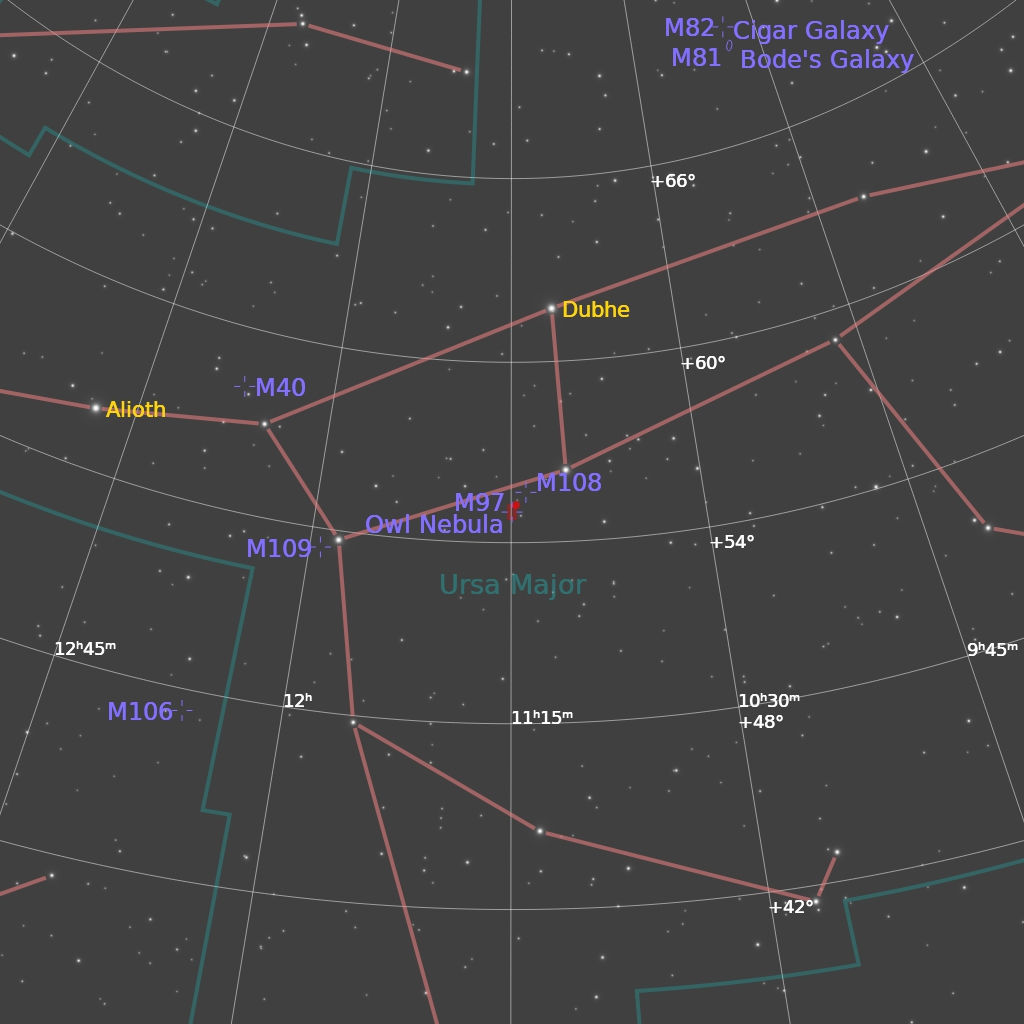
Click to expand
Image Capture
Location:
Back yard in North Dallas
Camera:
Total integration: 3h 33m
Integration per filter:
- Optolong L-eXtreme: 3h 33m (71 × 180")
Coordinates: 11h 14m 48.555s · +55° 1′ 11.11″
ZWO ASI2400MC-Pro


Astrobin Top Pick
Awards
